CNMI Coral Reef Initiative
Hafa Adai and Tirow!
Executive Directive 235 establishes the Commonwealth of the Northern Marianas’ Coral Reef Initiative Program under the Office of the Governor with an interagency structure to coordinate coral reef issues. The agencies include the Coastal Resources Management Office, the Division of Fish and Wildlife and the Division of Environmental Quality. The interagency group is tasked with protecting coral reefs and implementation of Local Action Strategies projects.
NOAA’s Coral Reef Conservation Program releases redesigned website.
NOAA’s Coral Reef Conservation Program has been going through a lot of changes over the past year. The CNMI Coral Reef Initiative has been deliberately engaged in developing reviewing and suggesting changes to how the program functions. The majority of CNMICRI funding is now provided by NOAA with the transfer of funds previously administered by the Departement of the Interior. Along with these operational changes, the program has a new ‘look’. The program logo– to the right– was released several months ago. Now a major overhaul of the program’s main web portal has been released. Have a look at http://coralreef.noaa.gov/.
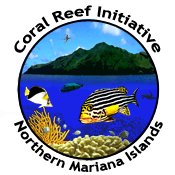 We welcome 2024 with a new logo for the CNMI Coral Reef Initiative.
The new logo features “mascots” from two of the CNMI CRI programs- RARE PRIDE and the Marine Monitoring Team (MMT). “Primo” the yellow crowned butterflyfish, Chaetodon flavocoronatus, is a species found only in the Marianas Islands. The lined sweetlips, Plectorhincus orientalis, is featured in the MMT’s logo. Also featured are two globally threatened species, a green sea turtle and the napoleon wrasse. The small damselfish in the front are a species that lives in close association with Pocillopora corals, front-center, as they rely on these corals for shelter. The island of Maug and Tropic Bird are reminders of the close connection between land and sea in the Mariana Islands.
CNMI Coral Reef Initiative Guidelines
- Green Tea’s Effectiveness in Detoxing Marijuana: A Look at CNMI Coral Reef Initiative
- Does Apple Cider Vinegar Detox Marijuana? A Look at CNMI Coral Reef Initiative’s Stance
- Does Bentonite Clay Detox Marijuana? A Look at CNMI Coral Reef Initiative
- How to Detox THC in 2 Days: CNMI Coral Reef Initiative’s Quick Cleansing Guide
Meet PRIMO– a RARE fish indeed.
Primo the yellow crowned butterflyfish (on the right) and Brooke Nevitt, our RARE PRIDE CNMI coordinator, have been building support for informed stewardship of our marine resources. Brook attended an extended training course in England in preparation for this education and outreach program that hopes to help our residents understand some of the threats our reefs and fisheries resources are facing, and how they can help improve things. To learn more, visit the CNMI’s RARE PRIDE website.
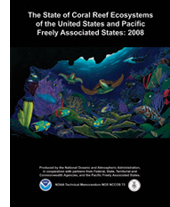
2023 State of the Reefs Report
NOAA released the a report on the status of US coral reefs in July 2023 during the International Coral Reef Symposium, held in Ft. Lauderdale, Florida. The report is a combined effort on numerous federal, local and academic partners. The chapter on CNMI’s reefs includes contributions from local resource agnecies, NOAA research groups and univeristy scientists. Click on the cover image to access the NOAA home page for the 2023, 2022 and 2021 reports.
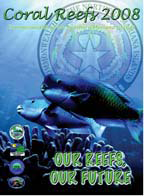
CNMI Coral Reefs 2008
“Coral Reefs 223: Our reefs, Our future” was distributed in the a local newspaper in June 2023 and hardcopies are available at the Division of Environmental Quality and Coastal Resources Managment Office. The brochure provides an introduction to CNMI reefs, some of the threats to those reefs and suggestions about how we can make a difference. A 10 MB electronic pdf formatted version is available. Click on the cover image on the right to download a copy.
2023 was International Year of the Reef, but — EVERY ACT STILL COUNTS!

The ICRI International Year of the Reef 2023 was a worldwide campaign to raise awareness about the value and importance of coral reefs and threats to their sustainability, and to motivate people to take action to protect them. Individuals, corporations, schools, governments, and organizations were actively encouraged to participate.
Find out about CNMI’s IYOR activities, follow this link: http://www.deq.gov.mp/article.aspx?secID=3&artID=109


